






Early Years Practice- 3.01 The Role of the Key Person and Settling-In
Policy statement
We believe that children settle best when they have a key person to relate to who knows them and their parents well and who can meet their individual needs. Research shows that a key person approach benefits the child, the parents, the staff and the setting by providing secure relationships in which children thrive, parents have confidence, our staff are committed, and the setting is a happy and dedicated place to attend or work in.
We want children to feel safe, stimulated, and happy in the setting and to feel secure and comfortable with our staff. We also want parents to have confidence in both their children’s well- being and their role as active partners with our setting. We aim to make our setting a welcoming place where children settle quickly and easily because consideration has been given to the individual needs and circumstances of children and their families.
The key person role is set out in the Safeguarding and Welfare Requirements of the Early Years Foundation Stage. Each child must have a key person. These procedures set out a model for developing a key person approach that promotes effective and positive relationships for children.
Procedures
- We allocate a key person in the first two weeks that the child starts.
- An introductory video will be posted onto the child’s Tapestry account for the parents and child to see.
- The key person is responsible for:
- Providing an induction for the family and for settling the child into our setting.
- Offering unconditional regard for the child and being non-judgemental.
- Acting as the key contact for the parents.
- Developmental records and for sharing information on a regular basis with the child’sparents to keep those records up to date, reflecting the full picture of the child in the setting and at home.
- Supporting and extending the child during their focus weeks. Liaising with parents about recent interests or areas of focus from home.
- Having links with other carers involved with the child and co-ordinating the sharing of appropriate information about the child’s development with those carers.
- Encouraging positive relationships between children in her/his key group, spending time with them as a group each day.
- We promote the role of the key person as the child’s primary carer in our setting, and as the basis for establishing relationships with other adults and children.
Settling In
- Before a child starts to attend our setting, we use a variety of ways to provide his/her parents with information i.e. Tapestry, Website and social media.
- Before a child is enrolled, we provide opportunities for the child and his/her parents to visit the setting.
- During the lockdown period, we carry out visits through virtual tours and up to date photos of the setting.
- Currently we are carrying out the first meet and greet session with parents using video calls. This is to give the key person and the parents the opportunity to discuss the child’s routine, likes, dislikes, family background, beliefs, SEN concerns etc.
- Before a child starts, we explain the process of settling-in with his/her parents and jointly decide on the best way to help the child to settle into the setting.
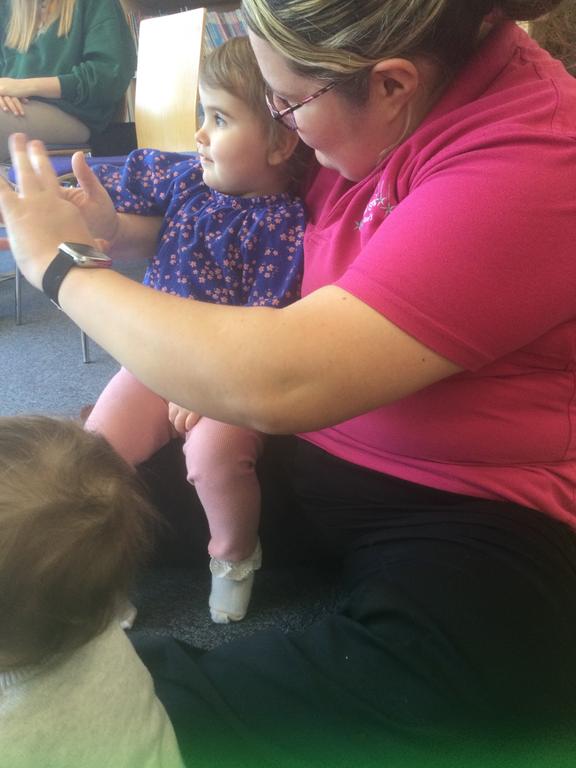
- The key person welcomes and looks after the child and his/her parents at the child’s first session and during the settling-in process. The key person observes and engages with the child to gain an understanding of their first starting points. The child’s starting points will be discussed with parents before their first focus week.
- Younger children will take longer to settle, as will children who have not previously spent time away from home. Children who have had a period of absence may also need to be re- settled into the setting. We ask parents to provide photos of themselves and the family for the children to use as comfort.
- We encourage parents to use Tapestry as much as possible as the children tend to settle when watching videos and seeing photos of their close family members.
- We judge a child to be settled when they have formed a relationship with their key person for example, the child looks for the key person when he/she arrives, goes to them for comfort, and seems pleased to be with them. The child is also familiar with where things are and is pleased to see other children and participate in activities.
- When parents leave, we ask them to say goodbye to their child and explain that they will be coming back, and when.
- We do not believe that leaving a child to cry will help them to settle any quicker. We believe that a child’s distress will prevent them from learning and gaining the best from the setting.
- We reserve the right not to accept a child into the setting without a parent or carer if the child finds it distressing to be left. This is especially the case with very young children.
The Progress Check at Age Two
- The key person carries out the progress check after the child’s second birthday in accordance with any local procedures that are in place and referring to the guidance A Know How Guide: The EYFS progress check at age two.
- The progress check aims to review the child’s development and ensures that parents have a clear picture of their child’s development.
- Within the progress check, the key person will note areas where the child is progressing well and identify areas where progress is less than expected.
- The progress check will describe the actions that will be taken by us to address any developmental concerns (including working with other professionals where appropriate) as agreed with the parent(s).
- The key person will use their progress check and include this when preparing for the child’s focus week, to meet the child’s needs within the setting and will support parents to understand the child’s needs to enhance their development at home.
- The progress check will be discussed with parents using video call to give the parents more opportunity and flexibility to be at the meeting.